
Kitchen Remodel vs. Kitchen Refresh: Which One Does Your Houston Home Need?
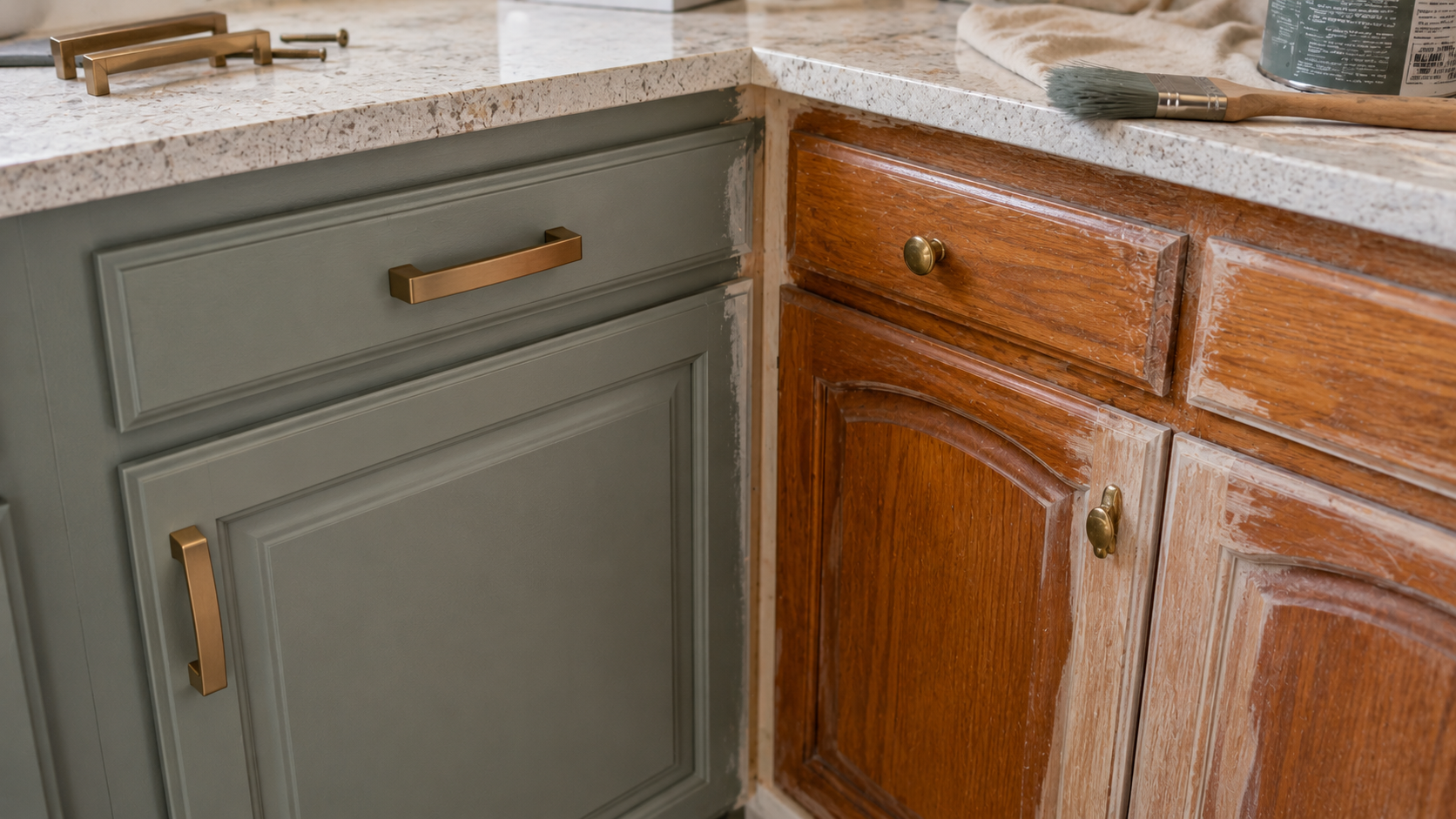
You know your kitchen needs help. The cabinets feel dated, the lighting is dim, and the countertops have seen better days. But does the room need a complete remodel—or could a focused kitchen refresh give you the result you want?
That decision affects far more than the budget. It determines how much of the kitchen will be removed, how long the work may take, whether permits could be involved, and how dramatically the room can change.
A kitchen refresh improves the appearance of a functional space while preserving most of its existing layout and core components. A kitchen remodel changes the room more substantially and may replace cabinetry, countertops, flooring, lighting, plumbing, appliances, and even walls.
The right choice depends on what is actually wrong with your kitchen. Let’s walk through the difference so you can invest in improvements that solve the real problem.
What Is a Kitchen Refresh?
A kitchen refresh focuses primarily on visible finishes. It works best when the room’s layout functions well, the cabinets are structurally sound, and the kitchen does not have major plumbing, electrical, or moisture problems.
A refresh may include:
- Painting walls and ceilings
- Painting or refinishing existing cabinets
- Replacing cabinet doors or hardware
- Installing new countertops
- Adding a backsplash
- Updating light fixtures
- Replacing the sink and faucet in the same location
- Installing new finish flooring
- Upgrading appliances without changing their locations
Think of a refresh as working with the kitchen you already have. The room keeps its basic footprint and workflow, but outdated surfaces and fixtures are replaced or improved.
A refresh can make a dramatic visual difference, especially when cabinet color, countertops, backsplash, lighting, and hardware are coordinated. It can also be less disruptive because it avoids extensive demolition and major changes behind the walls.
What Is a Full Kitchen Remodel?
A full kitchen remodel goes beyond surface updates. It addresses the way the kitchen is designed, arranged, and built.
A remodel may include:
- Removing existing cabinets and countertops
- Installing new or custom cabinetry
- Moving the sink, dishwasher, range, or refrigerator
- Adding or enlarging a kitchen island
- Removing a wall for an open-concept layout
- Changing doorways or traffic paths
- Updating plumbing, gas, or electrical systems
- Adding circuits, outlets, and under-cabinet lighting
- Replacing flooring throughout the room
- Installing new appliances and ventilation
- Repairing subflooring, framing, or hidden damage
Turnkey Painting and Remodeling’s kitchen remodeling service covers complete transformations, including cabinetry, countertops, lighting, flooring, backsplash, plumbing, appliance installation, and structural layout changes.
A full remodel gives you much more freedom. Instead of decorating around the existing kitchen, you can correct poor storage, awkward traffic flow, limited counter space, insufficient lighting, or an outdated closed-off layout.
Kitchen Refresh vs. Kitchen Remodel: The Main Differences
The easiest way to decide is to compare what each project is designed to accomplish.
Scope
A refresh changes finishes and selected fixtures. A remodel can replace the kitchen from the cabinets outward and may alter the room’s structure or systems.
Layout
A refresh usually preserves the existing layout. A remodel can relocate appliances, plumbing, walls, doorways, and islands.
Cabinetry
A refresh may paint, reface, or update sound cabinets. A remodel typically replaces cabinetry when the boxes are damaged, storage is inadequate, or the layout needs to change.
Cost
Turnkey’s kitchen service page lists cosmetic refresh projects at approximately $15,000 to $30,000. Full kitchen remodeling starts around $40,000, with mid-range projects listed at $40,000 to $75,000 and full gut renovations at $75,000 to $120,000 or more.
These are planning ranges rather than quotes. Your actual investment will depend on kitchen size, materials, cabinet requirements, existing conditions, and the amount of trade work involved.
Timeline
A refresh may take approximately two to four weeks, depending on material availability and scope. Turnkey advises that a typical full kitchen remodel may take four to ten weeks, while highly customized projects can take longer.
Permits
Purely cosmetic work may not require a building permit. Structural work and changes involving electrical, plumbing, gas, or mechanical systems may require permits and inspections based on the property’s jurisdiction and final scope.
Disruption
A refresh can still interrupt normal kitchen use, but a full remodel is generally more disruptive. During a major renovation, homeowners may need a temporary food-preparation area and a plan for eating without a functioning kitchen.
When a Kitchen Refresh Makes Sense
A refresh may be the smart choice when the kitchen works well but looks tired.
You may be a good candidate if:
- The existing layout supports how you cook and move
- The cabinet boxes are solid and in good condition
- You have enough storage
- Counter space is adequate
- The sink and appliances are in practical locations
- There are no known plumbing or electrical problems
- You want a visual update rather than a structural transformation
- You plan to remain within a more limited budget
- You need the work completed with less disruption
For example, a Houston kitchen with sturdy wood cabinets, a practical work triangle, and enough storage may not need to be demolished. Cabinet painting, new quartz countertops, updated backsplash tile, modern lighting, and fresh hardware could give it an entirely different personality.
Painting services can also be part of a targeted refresh when cabinets, walls, trim, or ceilings are the main visual problem.
When a Full Kitchen Remodel Is the Better Choice
A refresh cannot fix a layout that simply does not work. If you are constantly walking around an island, fighting for preparation space, or storing appliances in another room, new paint will not solve the frustration.
A full remodel is usually worth considering when:
- Cabinets are damaged, deteriorated, or poorly constructed
- Storage is inadequate even after organizing
- The layout creates traffic bottlenecks
- The kitchen feels isolated from nearby living spaces
- Plumbing or appliances need to move
- Electrical capacity does not support current needs
- Lighting is poorly placed or insufficient
- The island is too small, too large, or in the wrong location
- Water damage or subfloor problems are present
- You want a long-term transformation rather than a temporary improvement
A remodel may also make sense when several cosmetic updates would still leave you with the same basic problems. Spending heavily on countertops and cabinet refinishing can feel wasteful if you expect to remove those cabinets and change the layout a few years later.
The Cabinet Question: Paint, Reface, or Replace?
Cabinetry is often the deciding factor between a refresh and a remodel.
Painting may be appropriate when the cabinet boxes and doors are in good condition and the existing layout works. Proper preparation and cabinet-specific coatings are important because kitchen surfaces experience frequent touching, grease, steam, and cleaning.
Refacing typically replaces doors and drawer fronts while covering the visible cabinet boxes. It can change the kitchen’s style while preserving the cabinet structure.
Replacement gives you the greatest flexibility. New cabinetry can improve storage, extend cabinets to the ceiling, create better drawer organization, accommodate new appliances, or support an entirely different layout.
Before investing in painting or refacing, check:
- Are the cabinet boxes square and secure?
- Are shelves sagging or damaged?
- Do drawers operate properly?
- Is there evidence of moisture damage?
- Does the configuration provide enough usable storage?
- Would you keep the same layout for many more years?
If several answers are no, replacement may provide better long-term value.
Should You Keep the Existing Kitchen Layout?
Keeping the layout is one of the clearest ways to manage cost and complexity. Plumbing, electrical connections, and gas service can often remain where they are, reducing the amount of behind-the-wall work.
However, preserving a bad layout just to save money can leave you disappointed. Consider how the kitchen supports real daily routines:
- Can two people work without colliding?
- Is there enough landing space beside major appliances?
- Can appliance and cabinet doors open without blocking each other?
- Is the refrigerator convenient to the kitchen entrance?
- Are trash, dishes, and food storage located where they are used?
- Does the island improve circulation or interrupt it?
- Is there enough task lighting over preparation areas?
If the answers reveal recurring problems, a layout change may be the most valuable part of the project.
Can You Combine a Refresh and a Remodel?
Yes. Not every project fits neatly into one category.
You might keep the perimeter cabinets but replace the island. You could preserve the appliance locations while installing new cabinetry. You might refresh the kitchen finishes while expanding the opening to the living room.
A hybrid approach can direct more of the budget toward the changes that matter most. The key is to define the complete scope before ordering materials. A “small” layout change can affect flooring, countertops, plumbing, electrical work, cabinetry, and permits.
How Do Houston’s Climate and Housing Conditions Affect the Decision?
Houston homes face humidity, plumbing risks, and occasional water intrusion. Before covering old problems with new finishes, inspect areas around the sink, dishwasher, refrigerator supply line, exterior walls, and flooring.
Signs that the kitchen may need more than a refresh include:
- Swollen cabinet panels
- Soft or uneven flooring
- Persistent musty odors
- Water stains inside sink cabinets
- Cracked tile caused by movement underneath
- Outlets that trip or feel warm
- Poor ventilation around cooking appliances
- Evidence of previous repairs that were never completed properly
If deterioration is hidden beneath cabinets or flooring, those materials may need to be removed before the full condition can be evaluated.
Questions to Ask Before Choosing
Before deciding between a kitchen refresh and a full remodel, ask yourself:
- What problems am I trying to solve?
- Which parts of the kitchen function well today?
- What frustrates me every day?
- How long do I expect to remain in this home?
- Would cosmetic improvements delay a remodel I already know I want?
- Are the cabinets worth preserving?
- Does the electrical system support my appliance and lighting plans?
- Would moving one feature meaningfully improve the entire room?
- How much disruption can my household manage?
- What investment range feels responsible for this home?
Then ask the contractor to separate must-have work from optional upgrades. A detailed written proposal can make the tradeoffs much easier to understand.
How Turnkey Helps You Choose the Right Scope
Turnkey Painting and Remodeling begins with an on-site consultation. A senior team member evaluates the space, listens to your goals, and looks at the conditions that cannot be judged from inspiration photos alone.
For a kitchen project, that conversation may cover cabinetry, countertops, flooring, backsplash, lighting, appliances, plumbing, ventilation, structural changes, material selections, permits, and the expected schedule.
You then receive a detailed written proposal outlining the agreed scope, timeline, material selections, and total investment. That clarity matters whether you choose a focused refresh or complete kitchen transformation.
Refresh What Works—or Remodel What Does Not
A kitchen refresh is a strong choice when the room functions well and the main problem is its appearance. A full kitchen remodel makes more sense when the layout, cabinetry, storage, systems, or condition of the room no longer supports the way your household lives.
The goal is not to choose the larger project automatically. It is to avoid spending money on changes that leave the real problems untouched.
If you are unsure which direction your Houston kitchen needs, Turnkey Painting and Remodeling can help you evaluate the space and build a practical scope. Call (281) 589-2000 or request a free kitchen remodeling estimate.